“growing area” search results (9000)
Introduction of Fine Coffee Bean producing areas-- New Guinea Coffee growing New Guinea Coffee
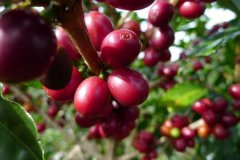
Well-known representative coffee: new Guinea is located in the north of Australia, also known as Papua New Guinea. The world's second largest island in the Pacific Ocean grows Arabica coffee trees, mainly in the north-central Hagen Mountains, where coffee beans are washed. The coffee trees of New Guinea are of the same species as the Jamaican Blue Mountains. The seeds were brought to New Zealand from the Blue Mountains in 1927.
2016-03-24 Boutique coffee beans producing areas introduction Guinea coffee cultivation new guineas guineas
An introduction to the flavor and taste of the elegant Panamanian Coffee Manor
It's the Panamanian region we know best. The special mountainous terrain of this area forms a microclimate which is very suitable for growing coffee. Cool weather and frequent fog slow down the ripening process of coffee cherries, and some even say that the climate can already simulate high-altitude planting. Altitude: 400m-1900m harvest time: December-March planting varieties: Tibika, Kaddura, Kadu
2016-08-04 Flavor elegance Panama coffee manor producing area taste characteristics introduction Ellie
The earliest place in Hainan Province to grow coffee
One of the earliest places to grow coffee in Hainan Province is located in the northwest of Chengmai County, Hainan Province, through the Haiyu West Highway. It is 50 kilometers away from the provincial capital city Haikou. It is the origin of Fushan coffee, a well-known brand in Hainan Province. The coffee in this area was introduced by Chen Xianzhang, an overseas Chinese who returned from the mountains in 1935. The area focuses on the natural landscape of the leisure resort and the essence of agricultural tourism.
2014-06-10 Hainan growing coffee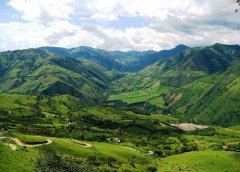
Haitian Coffee the main coffee growing area in Haiti is in the north of the country
Boutique coffee is fresh coffee. Whether it's food or drink, of course, the fresh the better, and so is boutique coffee. High-quality coffee should keep the coffee beans fresh before making, including the preservation of baked beans, and grind the coffee beans into powder before making, which is also to retain its original and best flavor. And the way of making hand-made coffee is such a way to make high-quality coffee.
2016-06-03 Haiti coffee landlords yes growing area country north boutique fresh
Description and treatment of Coffee Flavor in Xidamo Shaqiso producing area introduction to the taste of varieties
The taste of Sidama in the sun is close to the smell of flowers, but it is about a little earthy. Water washing has a nutty fruit aroma with a slight cocoa aroma, but what the two have in common is smooth taste and viscosity, comfortable and pleasant acidity and fragrance. Light or medium roasting is suitable for individual products, while medium or deep roasting is suitable for blending coffee and good Espresso base. The water-washed Sidamo is light green and the beans are small.
2016-10-14 Dharma Shaquiso producing area Coffee Flavor description treatment characteristics Variety Taste
Global Coffee producing area-introduction to the characteristics of Rwandan Coffee
Coffee production in Rwanda: there are about 33000 hectares of coffee plantations in Rwanda and 500000 people are engaged in coffee cultivation. With the good natural conditions of high altitude and fertile volcanic soil, the country's fertile soil and suitable climate contribute to plant growth, and coffee trees seem to be driven or forced to grow upward, or because they grow too fast to produce the best coffee beans.
2016-06-05 Global Coffee Origin Rwanda characteristics introduction about
Ethiopian coffee bean flavor taste the manor area introduces fine coffee beans Ethiopian coffee
Sustainable coffee culture Ethiopian coffee beans grow in close to the natural environment, after years of planting under the same growth conditions, Ethiopian coffee beans have gradually adapted to the environment here. More than 60% of coffee beans are grown in forests or semi-forests. The villages that grow coffee in large areas account for about the total amount of coffee produced in the country.
2016-07-21 Ethiopia coffee beans flavor taste manor producing area introduction boutique coffee
What kind of coffee beans are grown in southern China? Where is the best place to grow coffee in China?
The soil and climate in many parts of southern China are very suitable for coffee growth and have an ideal environment for coffee cultivation. At present, the main producing area of coffee in China is Yunnan, accounting for more than 80% of the national output, with Hainan second, while Guangdong, Guangxi, Fujian and Sichuan also grow a small amount. Yunnan is located in the southwest of China, with more than 400000 mu of land in the subtropics, of which the most suitable
2015-11-05 Which kind coffee beans China South planting where suitable coffee
Introduction of Coffee Variety Flavor description in Xida Mochizo producing area with strong fragrance
Sustainable coffee culture Ethiopian coffee beans grow in close to the natural environment, after years of planting under the same growth conditions, Ethiopian coffee beans have gradually adapted to the environment here. More than 60% of coffee beans are grown in forests or semi-forests. The villages that grow coffee in large areas account for about the total amount of coffee produced in the country.
2016-09-24 Smell aroma full-bodied Dharma Shaquiso producing area coffee variety flavor description
Beautiful Guatemalan coffee bean growing environment exquisite Guatemalan coffee
Guatemalan coffee is produced in the The Republic of Guatemala countries of northwestern Central America. The country's mountain forest area accounts for 2/3 of the national area, rich in high-quality coffee beans, its strong sour taste, mellow taste and slightly wild, can be used as a single drink or for the preparation of comprehensive coffee. Guatemalan coffee taste: bitter and fragrant, good taste. Highland
2016-05-03 Exquisite Guatemala coffee beans planting environment coffee production
Superior Jamaican Blue Mountain Coffee introduces how many coffee producing areas are there in Atlanta Manor?
By 1981, about 1500 hectares of land in Jamaica had been reclaimed for coffee cultivation, followed by investment in another 6000 hectares of coffee land. In fact, today's Blue Mountain area is a small area with a planting area of only 6000 hectares, and it is impossible to grow all the coffee marked Blue Mountain there. Another 12000 hectares of land is used to grow the other two types of coffee.
2016-07-12 Superior Jamaica Blue Mountain Coffee introduction Art Grand Manor Tooth Buy plus more
Java, the earliest coffee growing area in Indonesia, introduces Lindong, Sumatra.
Jakarta, the capital of Indonesia, located in the northwest of Java, is the largest city in Southeast Asia. In addition, Indonesia's second and fourth largest cities are located on the island of Java. Java is the first region in Indonesia to grow coffee and has taken the lead in the world coffee market as early as the 18th century. The famous Java mocha, made from Java coffee mixed with Yemeni mocha, represents the coffee impression of an era. In addition
2016-06-20 Indonesia earliest planting Coffee region Java introduction Sumatra Lin Dong
Coffee Basics The effect of altitude on coffee flavor
The impact of location on coffee bean flavor is profound. All coffee is grown in the tropics, and the altitude at which it is grown has a profound effect on the taste of coffee. The equatorial regions of the tropical belt, which extends from 30 degrees north latitude to the southern mountains, produce the world's truly premium Arabica coffee. Central and South America, South Asia and some Pacific islands, South Central Africa is also the world's most important
2014-11-22 coffee knowledge coffee basics altitude coffee flavor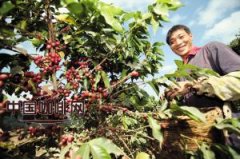
Puer City, Yunnan Province has become the most widely planted area in China.
Pu'er City, Yunnan Province, which gets its name from tea, has become the most widely planted and most productive coffee producing area in China in recent years. In March, when you come to the famous tea village of Pu'er City, you will see that the tea garden in the farmland has pulled out the tender flower stars, the spring tea is about to be on the market, and the precocious wheat is rolling with golden waves of wheat, showing signs of a bumper harvest. But the local farmers told me that because of growing tea and farming,
2015-11-06 Yunnan Province Pu'er City become China planting area the widest
Coffee trees grow around the equator.
Coffee trees grow in tropical or subtropical agricultural gardens centered around the equator and called coffee belts. Most of the coffee production is between the Tropic of Cancer, 25 degrees north of the tropical or subtropical equator and 30 degrees south of the equator. An area with an annual average temperature of 16-25 degrees Celsius, no Frosts Descent and rainfall of 1600-2000 mm. At present, coffee is mainly produced by seven countries.
2015-07-01 Coffee tree grow equator center coffee for the middle
Coffee growing area of Galapagos Islands composed of volcanic piles and lava
Along the coast, the annual precipitation is only 250 mm, with tall trees. The animals on the island are peculiar, especially for giant turtles and lizards. In 1535, Spanish navigator Thomas de Belanga led a fleet to the archipelago and landed and found that it returned to Ecuador in 1832. Darwin, a British naturalist, visited the island in 1835. The rare fauna on the island has played a role in demonstrating his theory of biological evolution.
2016-06-17 Volcano lava composition coffee growing area Lapa Goss archipelago
Description of elegant Panamanian Cupid Coffee Bean Flavor in producing area
Coffee was first brought to Panama by European settlers in the 19th century. In the past, Panamanian coffee did not have a good reputation, and its output was only 1 / 10 of that of its neighbor Costa Rica, but now the coffee industry's focus on boutique coffee has made Panama more and more interested in growing coffee. Panama's geographical advantage is that it has a lot of distinguishing microclimate areas suitable for coffee.
2016-09-24 Flavor elegance Panama Cupid coffee variety producing area boutique coffee beans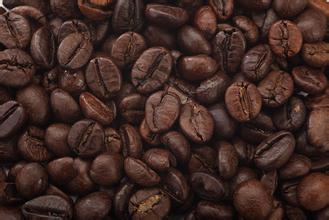
Is it caffeic acid at high altitude? The higher the Haibo, the better the quality of the coffee. Where does the acid in the coffee come from?
The influence of altitude on coffee flavor the influence of geographical location on coffee bean flavor is profound. All coffee grows in the tropics, and the altitude at which it grows has a profound effect on the taste of coffee. The tropical belt extends from 30 degrees north latitude to the equatorial regions of the southern mountains that produce the world's truly high-quality Arabica coffee. Central and South America, South Asia and some Pacific islands, non-
2016-01-14 Altitude high coffee sour Haibo the higher the quality the better medium from where
Haikou coffee growing area coffee beans Haikou flavor coffee
Haiti's Good Coffee from Politically Troubled Land Despite its well-known problems and fluctuating coffee quality, Haiti is still trying to produce some quality coffee. Most of the coffee produced in Haiti is grown in its natural state, not intentionally but as a result of material shortages, because farmers are too poor to buy it.
2016-05-04 Haikou coffee cultivation region coffee beans flavor Haiti own politics trouble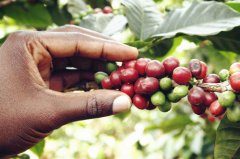
Haitian Coffee individual Coffee Coffee Bean growing area
Haiti is trying to produce some high-quality coffee, despite well-known problems and fluctuating coffee quality from politically troubled countries. Most of the coffee produced in Haiti is grown in a purely natural state, which is not intentional but the result of material shortage because farmers are too poor to buy it.
2016-05-17 Haiti coffee individual products coffee beans cultivation own politics trouble territory